Design Leadership for Clio's Next Stage
Workflow clarity, team judgment, and customer trust in AI-era legal work
Mike Long | Manager, Product Design case study
Workflow clarity, team judgment, and customer trust in AI-era legal work
Mike Long | Manager, Product Design case study
I will keep the prepared path simple: a short intro, then two cases that show how I make complex work clearer.
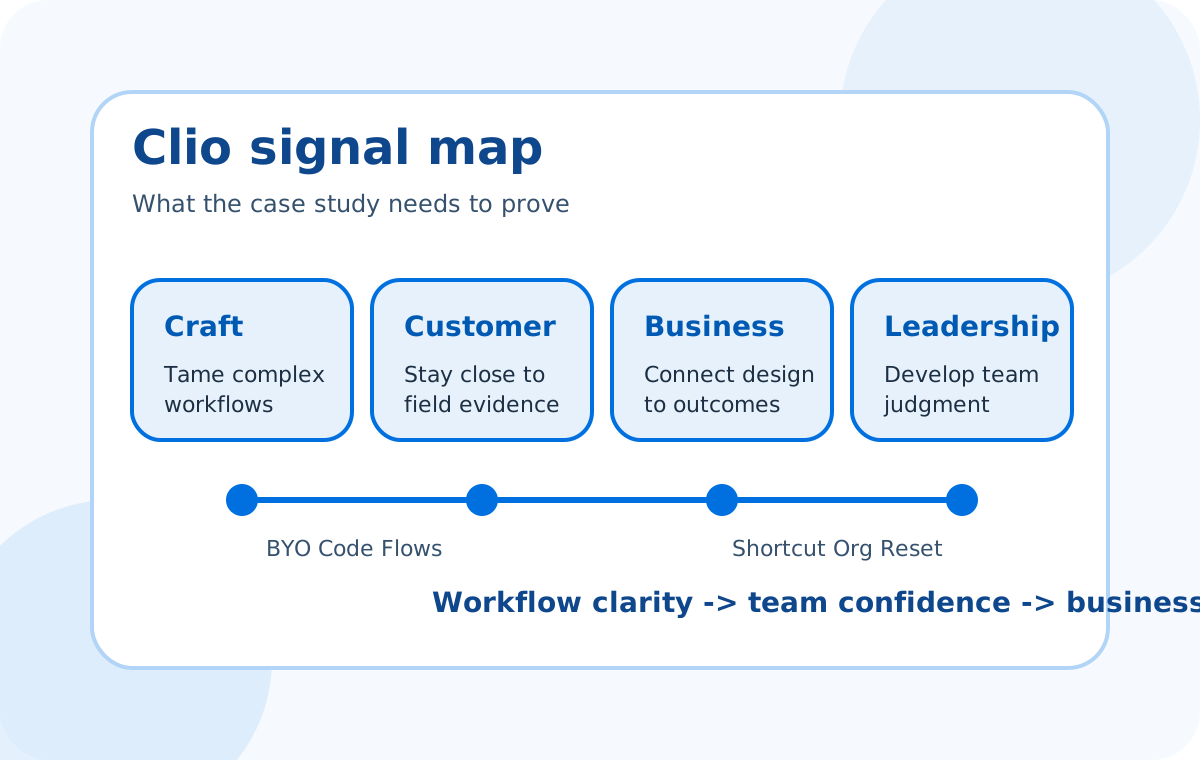
I will make the evidence visible without turning this into a rubric walkthrough:
Two stories carry the prepared path:
My management style is practical and inspectable:
summary
3
The best mentorship happens in the work, before the decision is too expensive to change.
I like hard domains because the product has to earn trust, not decorate complexity.
Powerful products fail when workflows, ownership, and evidence stay implicit.
The user sees capability but not enough context:
The team ships ambiguity forward:
The work is to make both systems clearer:
This keeps the story honest: who changed what, who delivered it, and what evidence supports the claim.
The customer-facing signal was not cosmetic. It was comprehension, confidence, and recoverability.
“
The flow to do that is really counterintuitive because you need to put a file path here, which needs to be hard-coded.
Customer/SA walkthrough, 2025-10-21
“
As a first-time user who is self-serving, this is super confusing because I don't know whether I should click on run now.
Customer/SA walkthrough, 2025-10-21
“
Ideally, we want to get to a state where customers don't need our help to do everything.
Customer/SA walkthrough, 2025-10-21
The V1 Reality Check
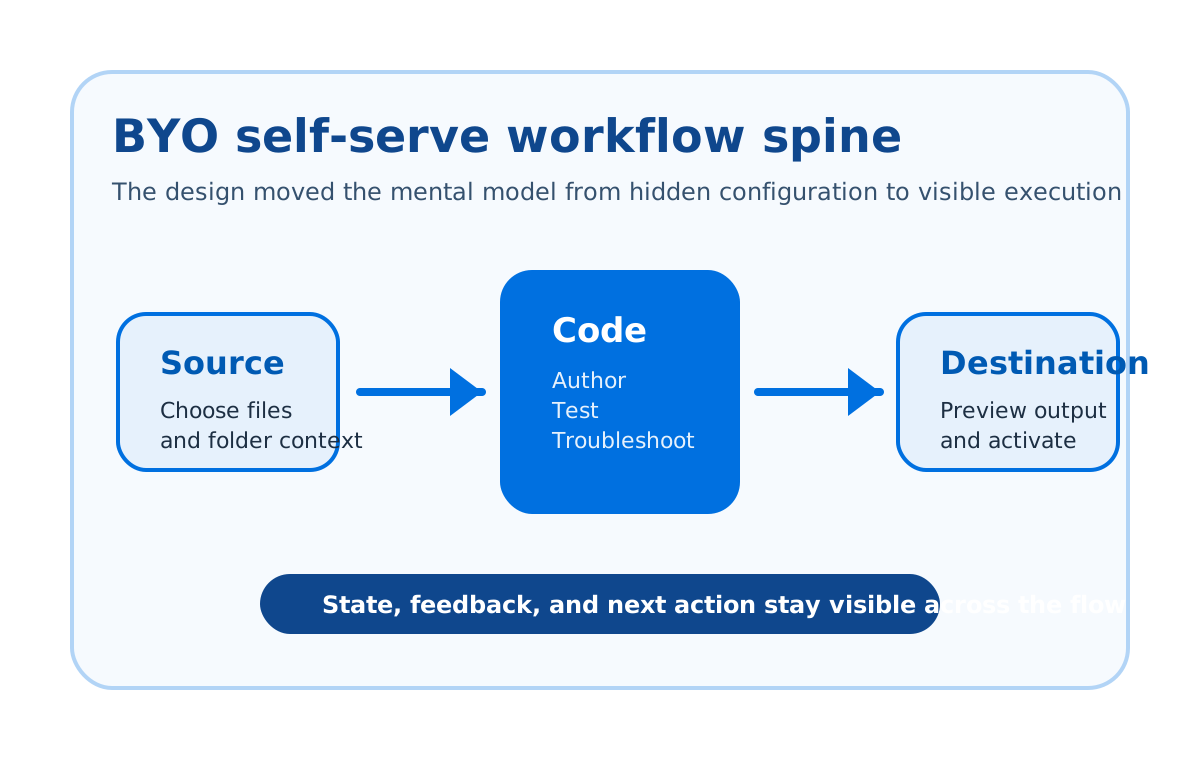
The first version exposed capability but scattered the mental model.
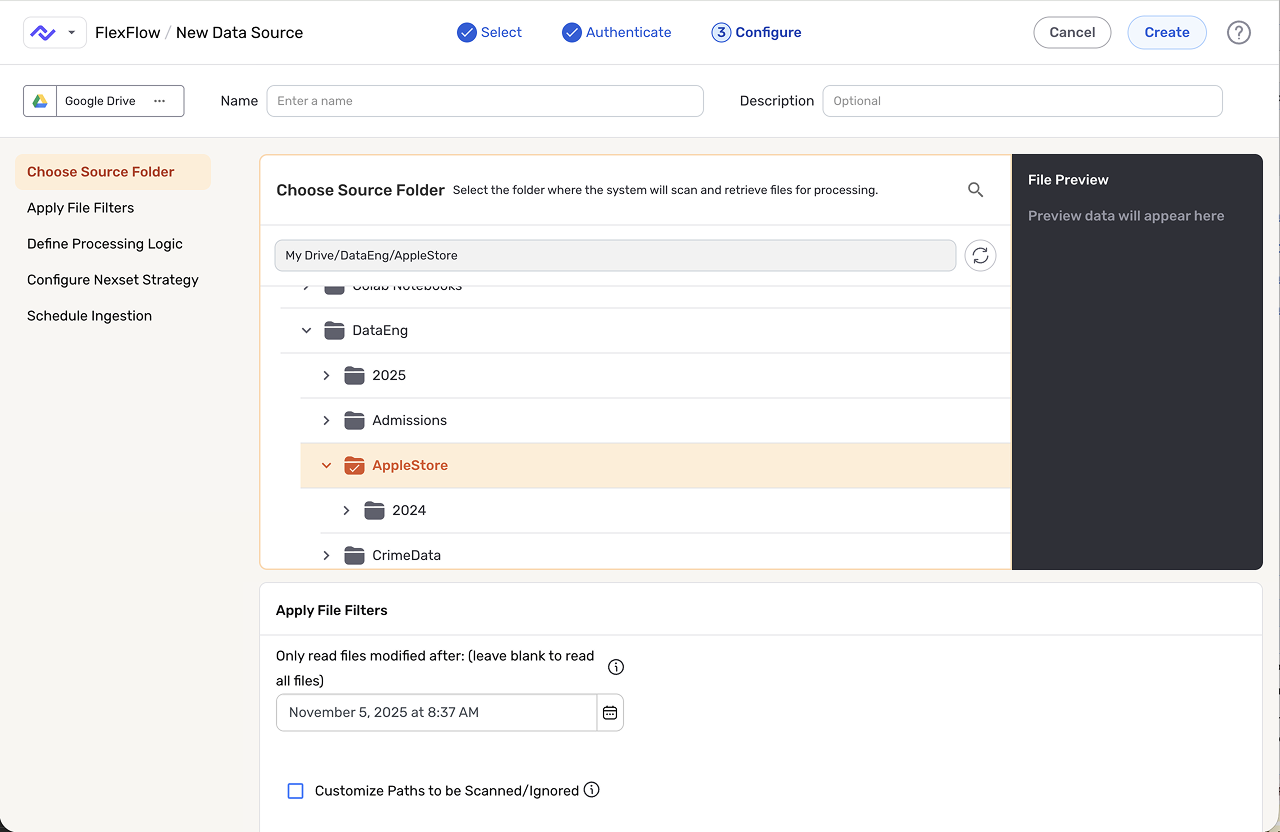
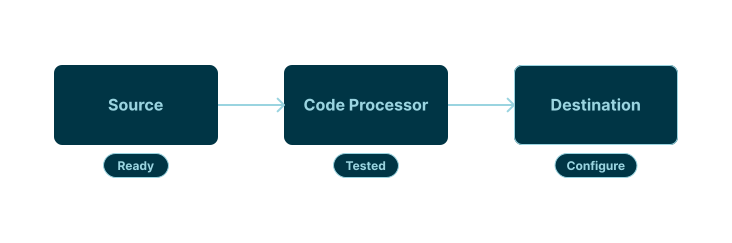
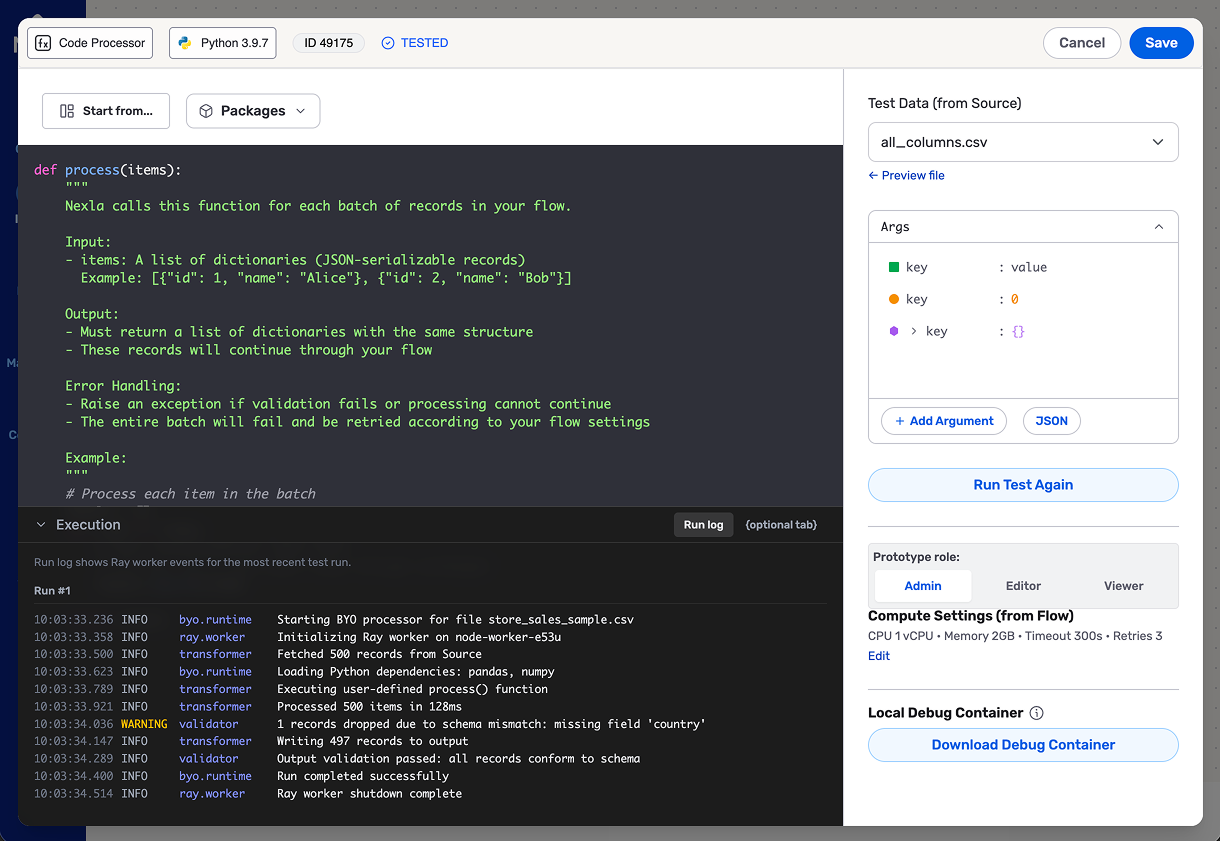
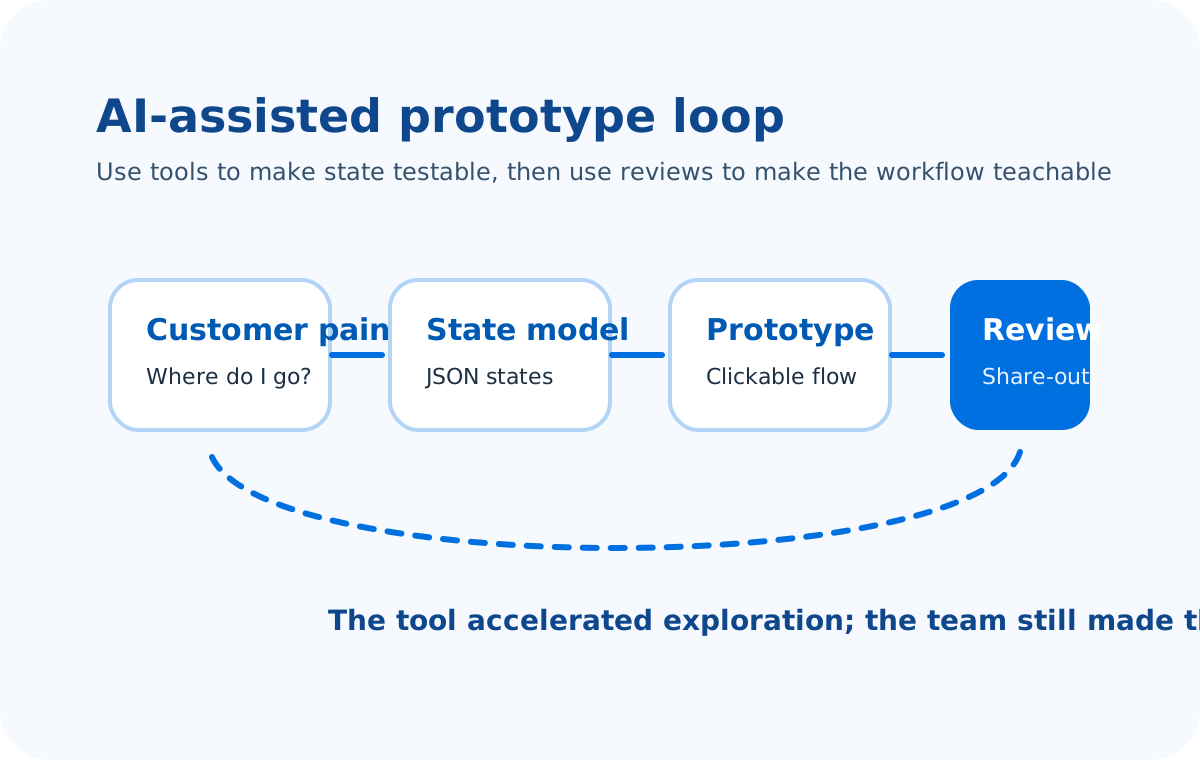
The useful AI move was not faster decoration. It was making workflow behavior inspectable.
“
I use ChatGPT and Figma Make, which is Claude behind the scenes.
BYO design review, 2025-11-06
“
So I had ChatGPT create a state model in JSON.
BYO design review, 2025-11-06
“
That state model is basically telling Figma Make that there are different states to this and to trigger different things at different times.
BYO design review, 2025-11-06
The design reduced the distance between action, feedback, and recovery.
“
You cannot just select it from here and test it right away. You need to put a file path here, which needs to be hard-coded.
Customer/SA walkthrough, 2025-10-21
“
Where do I go? Like from here, where do I go? I don't know.
Customer/SA walkthrough, 2025-10-21
“
If we had a badge here, like a circle saying, Hey, come over here, there's something wrong here.
Customer/SA walkthrough, 2025-10-21
The sourced outcome is a clearer workflow contract; the launch metrics stay framed as measurement targets.
The team had a stronger product contract:
The launch plan should test independence:
The most important craft decision was upstream:
The leadership case starts with what I inherited: product debt, trust debt, and no clear path for design growth.
The team was not only missing a ladder:
The work had to change how quality happened:
This is the people-leadership proof:
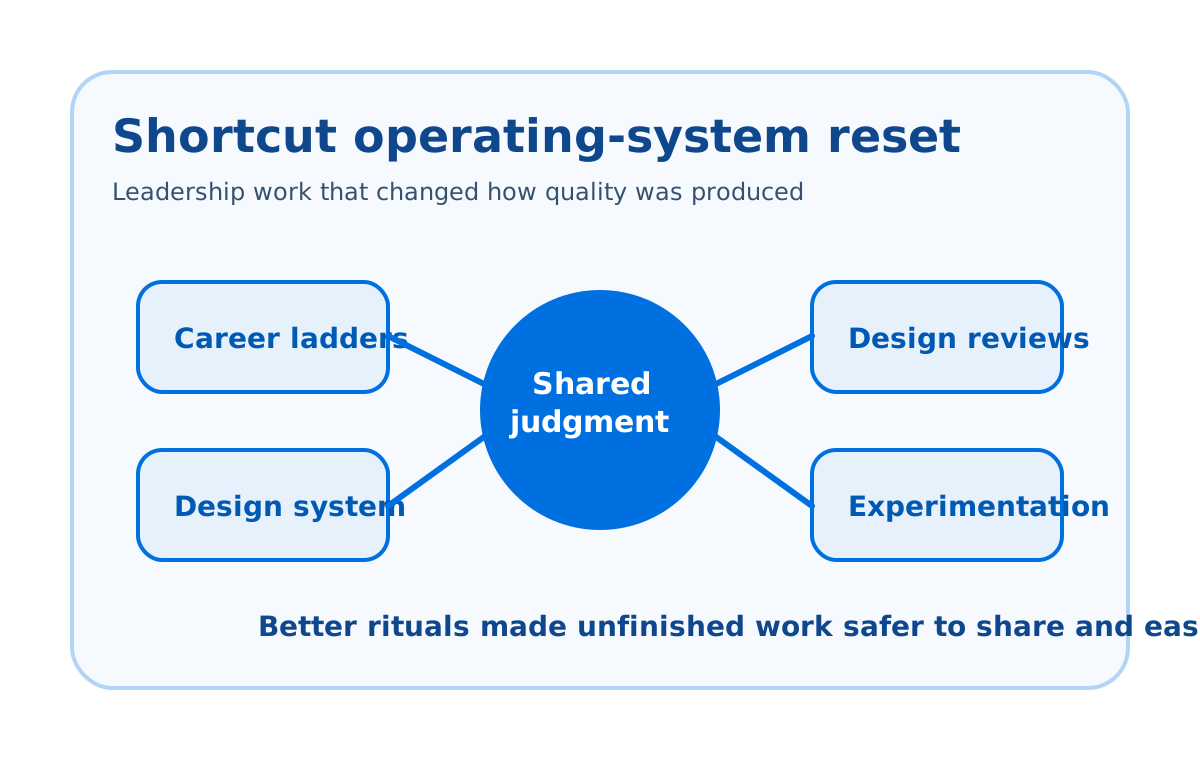
The team needed better conditions for judgment, not just stronger taste from leadership.
The operating reset showed up in product and team outcomes.
The team had good people but weak operating structure:
I connected people systems to product systems:
The work became easier to align and measure:
I would make the evidence and operating model visible sooner, especially for leaders outside design.
Design management is the work of making customer evidence, product quality, team judgment, and business outcomes reinforce each other.
A compact scope-judgment case for Q&A.
The same preview issue kept coming back:
I narrowed the work to the minimum useful contract:
This is the support case for scope judgment:
Where the main claims come from.
If the panel pivots early, keep the proof sequence intact.
The deck is built to support deeper discussion.